 Amaranth

golden giant amaranth
Amaranthus hypochondriacus
Last edited by shiny on November 13, 2026. View history
How to sow amaranth: Direct seed, thin seedlings to 15cm
Sun requirement for amaranth: Plant in Full Sun
Amaranth is a tall annual herb with clusters of dark burgundy flowers grown for it's seeds and leaves. Young greens have a flavor similar to spinach, and seeds are high in protein like Quinoa. Amaranth seeds are often ground into flour and used as a grain alternative. The plant is heat and drought-resistant but lacks a high frost tolerance. Other members of the Amaranthus genus are used as ornamentals. Amaranthus retroflexus (commonly known as Pigweed) was cultivated by Native Americans for it's grain and is currently a widespread weed in North America.
A plant grows with warmth, not with days. A growing degree day is one day's worth of useful warmth: how many degrees the day's average temperature is above the lowest temperature the crop grows at. Add them up from planting and you know how far along the crop is, whatever the calendar says.
Say that lowest temperature is 10°C. A day averaging 17°C gives 7 growing degree days. A day averaging 8°C gives none, as it is too cold for the crop to grow. That is why the same lettuce takes about 50 days in a summer and 90 in an autumn: it needs the same total warmth either way.
For amaranth, the FAO EcoCrop database gives a lowest growing temperature of 7°C and a shortest growing cycle of 30 days at its best temperature, about 525 growing degree days to a first harvest.
Where you've told us where your garden is, we use this and the weather there to predict when your amaranth will be ready to harvest. We don't use it for how long a plant lives or when it finishes: we go by what members have logged for that.

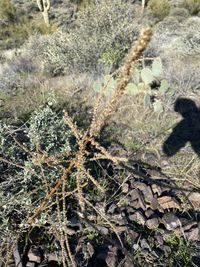
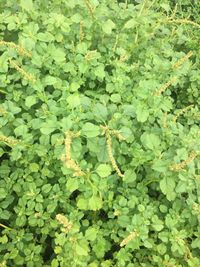
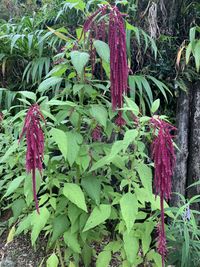
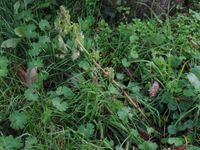
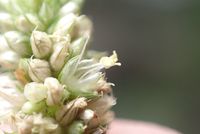
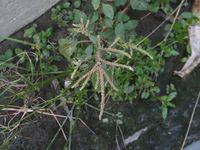
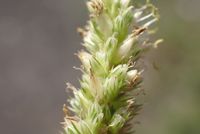
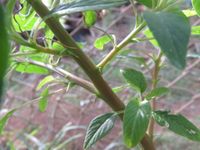


Only plantings by members who have set their locations are shown.
Nobody has posted about amaranth yet.
Sign in or sign up to post your tips and experiences growing amaranth.
If sown now, expect a first harvest in about 30 to 300 days.
From the growing cycle in the FAO EcoCrop database, which is the same wherever it is grown.
Data from the FAO EcoCrop database for Amaranthus sp.
| Family / Taxonomy | Magnoliopsida Caryophyllidae Caryophyllales Amaranthaceae |
|---|---|
| Killing temperature | growth: 0 °C, rest: 4 °C |
| Life form | herb |
| Life span | annual |
| Habit | erect |
| Optimal soil depth | medium (50-150 cm) |
| Optimal soil texture | heavy, medium, light, organic |
| Optimal soil fertility | high |
| Optimal soil drainage | well (dry spells) |
| Optimal soil salinity | low (<4 dS/m) |
| Photoperiod | short day (<12 hours), neutral day (12-14 hours), long day (>14 hours) |
Resources outside Growstuff.


 Photos


 CaravanChild harvested 2 handfuls.
 View all amaranth seeds